About Pythonoid

A game, not a course with quizzes bolted on.

You write real Python, and the game world reacts to exactly what you wrote — that interaction is how the learning happens, not a lecture beforehand.

Real Python, not blocks

There is no block language and no simplified pretend-code — every line you write is real, runnable Python, the same language used everywhere else.

Anyone learning Python for the first time can play it; the exercises are paced for a beginner starting around age 10 and up.

  • The same languageCode written in Pythonoid would run unchanged in any Python environment.
  • Right in the browserPython runs inside the browser tab itself.
  • Ages 10 to 14The reading and typing load is pitched at 10+.

The one character

The dragon doesn't just watch.

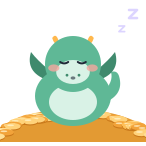
The dragon is the game's one character. It doesn't just watch — it reacts to exactly what you write: what you print(), what you name your variables, which branch your if takes, how many times your loop runs.

Making something happen on screen, in your own words, is the point — not answering questions about code.

How a topic works

Each topic is a short cycle: the dragon explains one idea at a time, asks a question about it, then hands you a task to try with help, followed by a couple of tasks on your own.

Every topic ends with a harder challenge that combines everything in it — no filler, no repeats of the same exercise with different numbers.

  1. Explain

    The dragon explains one idea at a time.

  2. Ask

    It asks a question about it.

  3. Try with help

    A task to try, with help.

  4. On your own

    A couple of tasks on your own.

  5. The challenge

    A harder challenge that combines everything in it.

Never stuck for long

After three failed runs the game offers the answer without being asked. Getting stuck is normal; staying stuck until a child gives up is a design failure, so the help arrives on its own.

Who built this

Pythonoid was built from a research knowledge base of documented findings on how children actually learn to program — what misconceptions recur, what kind of feedback helps, and what doesn't.

Every exercise is designed around a specific, real misconception rather than an invented one.

  • Beginner misconceptionrange(5) counts to five
  • Beginner misconceptioncopying a list makes a second list

For parents & teachers

Questions parents ask

Ages 10 to 14

That lower bound is deliberate: meaningful code typing — reading error messages, matching brackets, spelling keywords exactly — generally becomes comfortable around 10 or 11. A younger child can absolutely enjoy it alongside an adult, but the reading and typing load is pitched at 10+.

No ads, no tracking

There is no advertising anywhere in Pythonoid, and no analytics software of any kind — nothing measures what a child clicks or how long they play. What is stored is an account, its progress, and nothing sold or shared with anyone.

The Privacy page lists every field exactly

Nothing to install

Python runs inside the browser tab itself — there is nothing to install, no account needed on the computer, and it works on a school-managed device. Code a child writes never runs on our servers.

The dragon is still asleep

One line of Python wakes it. That line takes about thirty seconds, and needs no account.